From Istanbul to London, Seda Gazioğlu transforms cultural codes, everyday rituals, and lived histories into contemporary works that question power, belief, and belonging.
Bizbize: Seda, you grew up in Istanbul and later studied in New York and London. How did your journey as a Turkish migrant shape you personally and as an artist?
As I gained the distance to look at my own culture from the outside, I became more curious about my roots — and in a way, more integrated with them.
What I began to question changed over time, and as my research gradually turned toward my own cultural background, my artistic practice evolved in the same direction.
Migration didn’t make me move away from my culture; it actually pulled me closer to it — but with new questions, new tools, and a different kind of awareness.
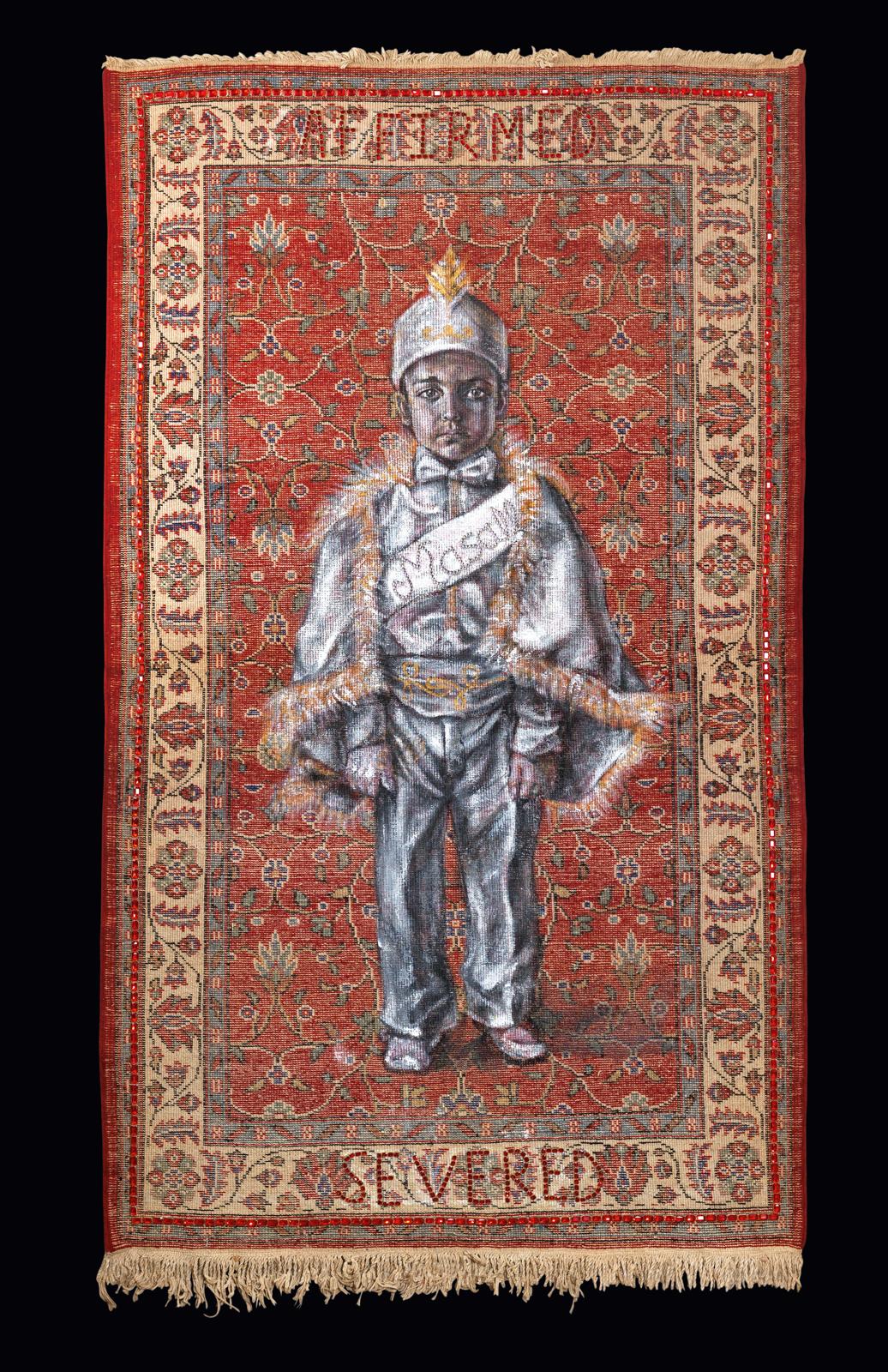
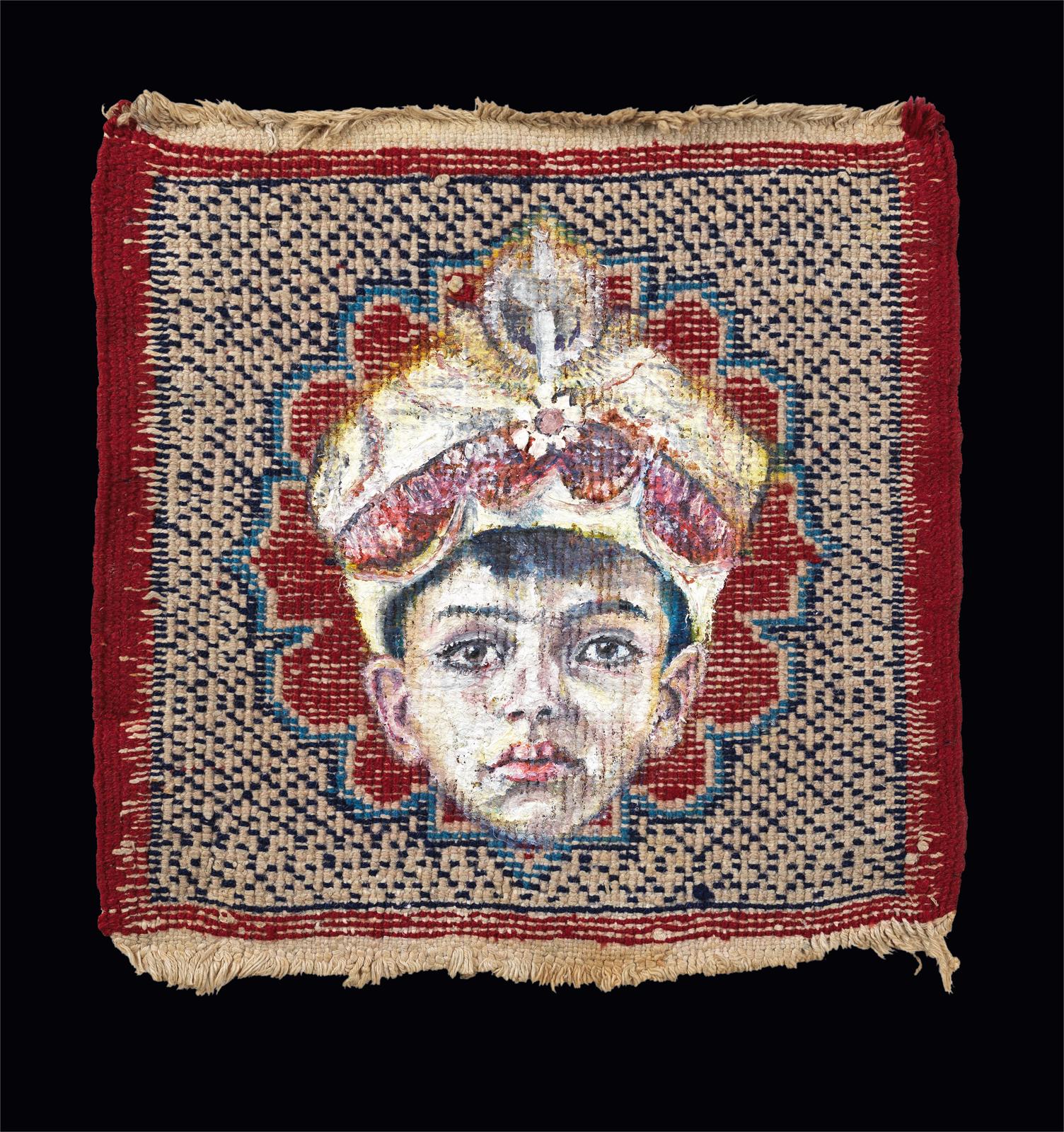
Bizbize: Your work blends tradition with contemporary mediums and often uses found objects like old Turkish carpets. What draws you to these materials and themes?
When I come across something that moves me, I regularly collect second-hand objects. I don’t start with a fixed material. When it’s time to produce a new work, I choose the object among what I’ve collected that resonates most with the subject I’m working on.
Because I’m interested in lived experiences, everyday gestures, habitual movements, and also mystical belief systems — and because I build my research mostly through my own culture — the objects I collect are usually second-hand, memory-laden, and carry traces of our roots.
These objects already hold a life, a past, and a symbolic weight. My role is not to give them meaning, but to activate the meaning they already carry.
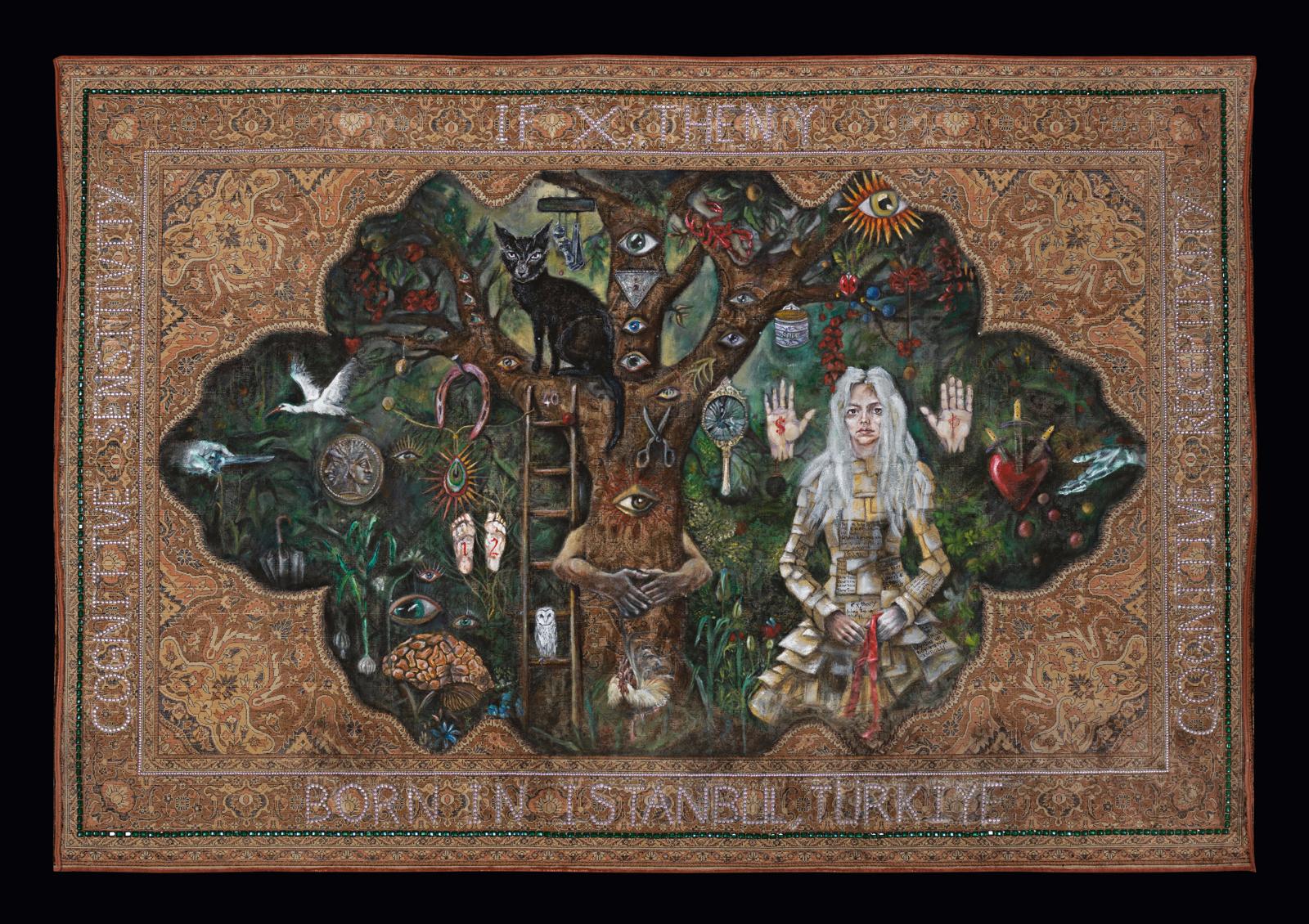
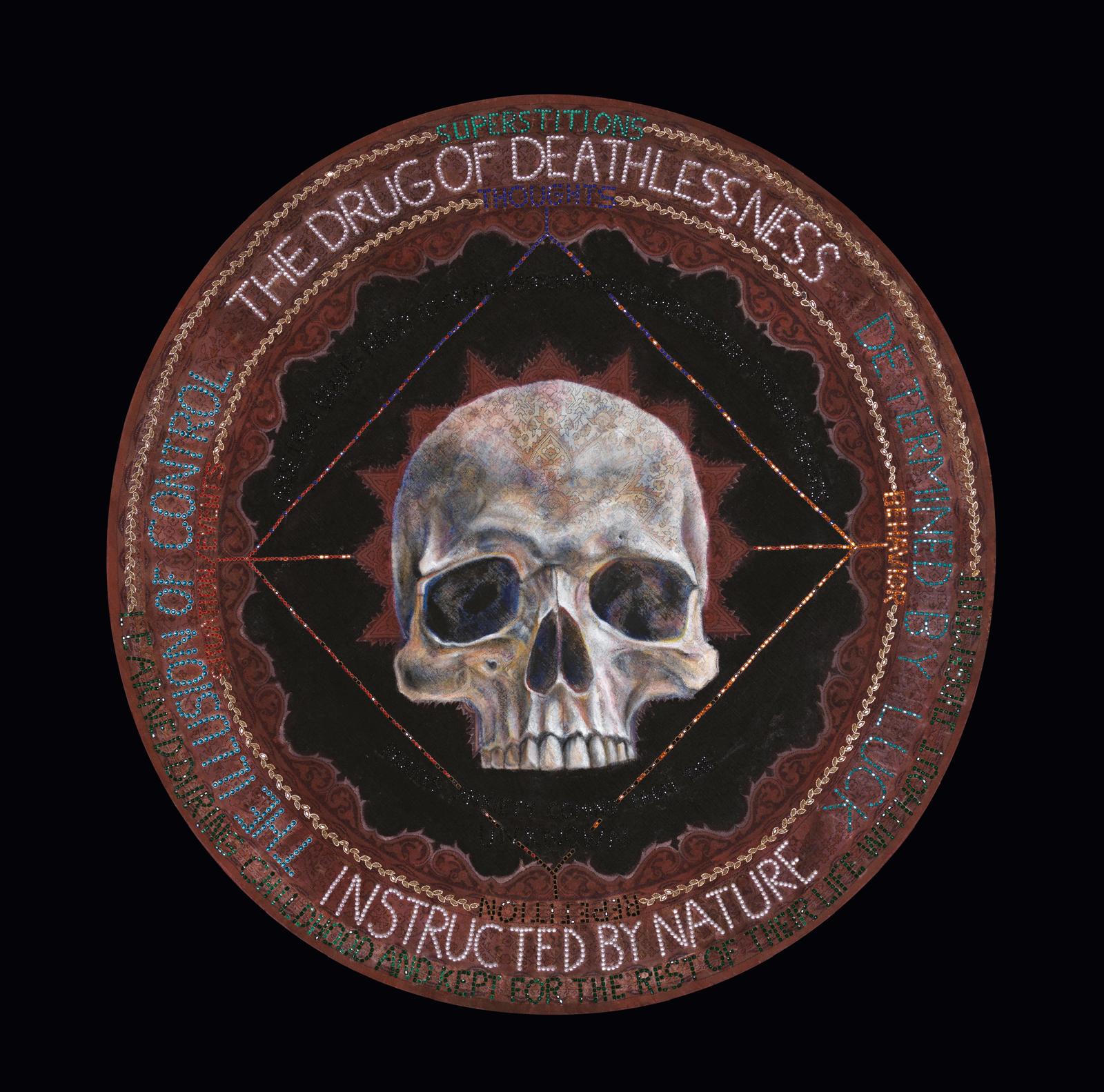
Bizbize: You developed a unique mapping method influenced by your learning difference. How does this approach shape the way you produce and think about art?
When a subject first captures my interest, I enter a deep research process — and the first person I explain it to is actually myself.
Sometimes I struggle to grasp very simple things through linear reading, but I have a visual mapping system that allows me to understand very complex topics as if they were simple.
I connect different subjects to one another in a loop, filter and distill them — until I find the shared core point that runs through all of them.
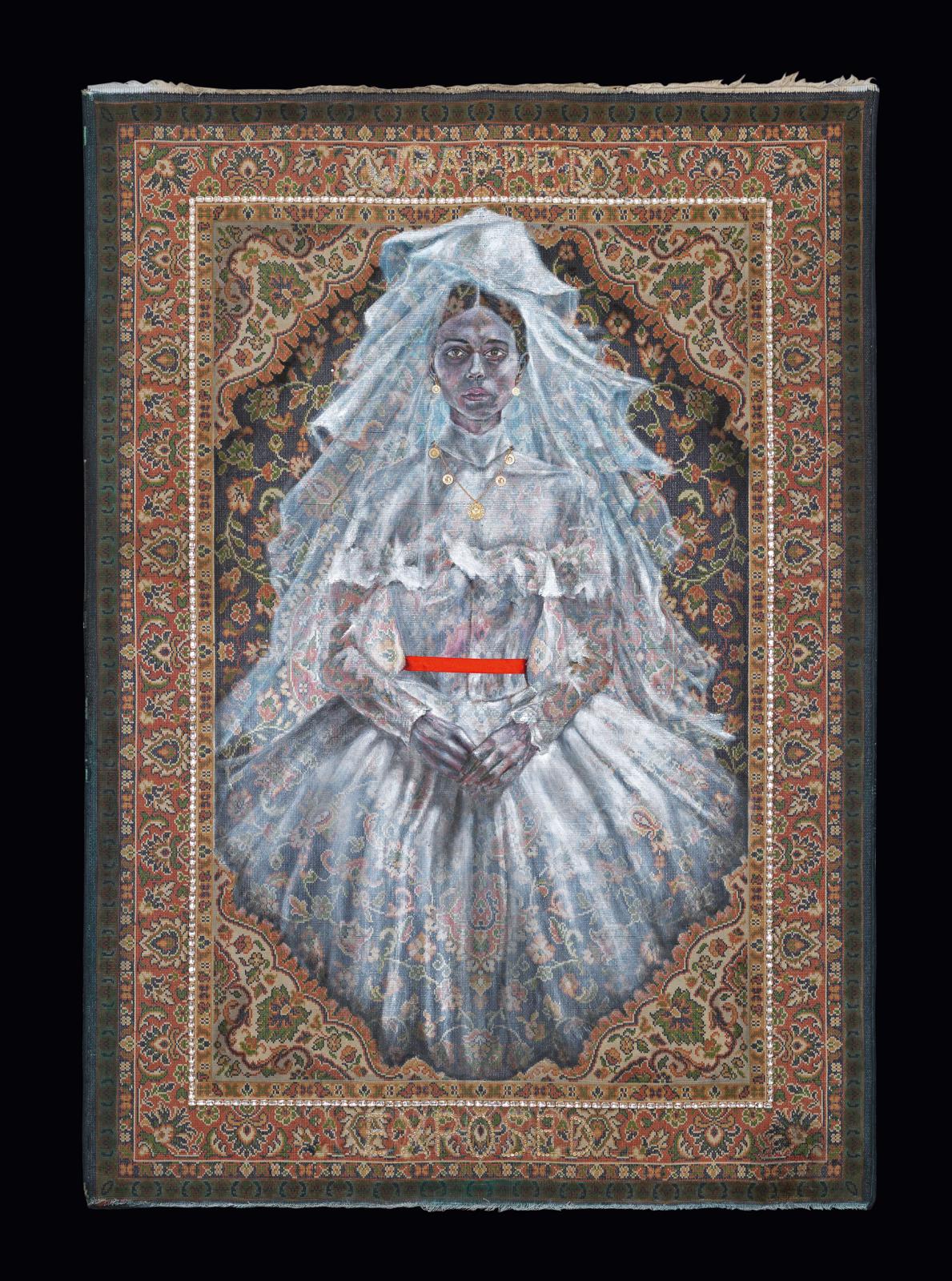

Bizbize: Your work engages with rituals, superstitions, and the “magic” in everyday Turkish life. What inspired you to explore these themes?
My interest began with a contradiction. I grew up in an environment that seemed quite modern and analytical on the surface, yet everyday life was quietly filled with superstitions inherited from our cultural codes.
Bizbize: Do you define yourself as a feminist? What does feminism mean to you in your everyday life and artistic practice?
Yes. I don’t experience feminism as a separate identity — I live it as a way of seeing the world.
Bizbize: How did the London School of Economics discover your work, and what was it like being invited to speak there as a feminist migrant artist?
Dr. Zeynep Kılıçoğlu included a sculpture from my exhibition Was That Cat Black? (a Kalashnikov metal sculpture) in her LSE postgraduate courses.
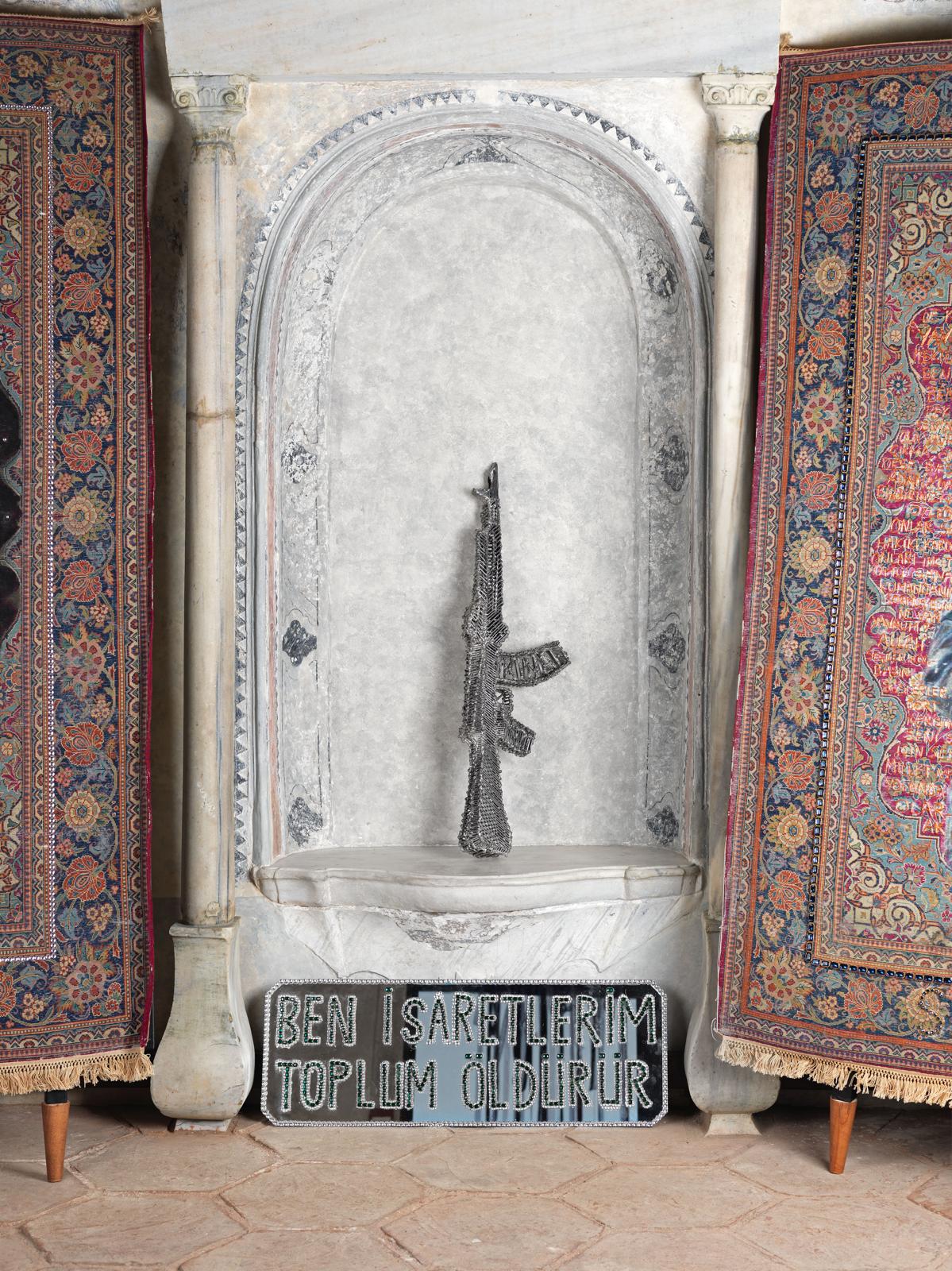
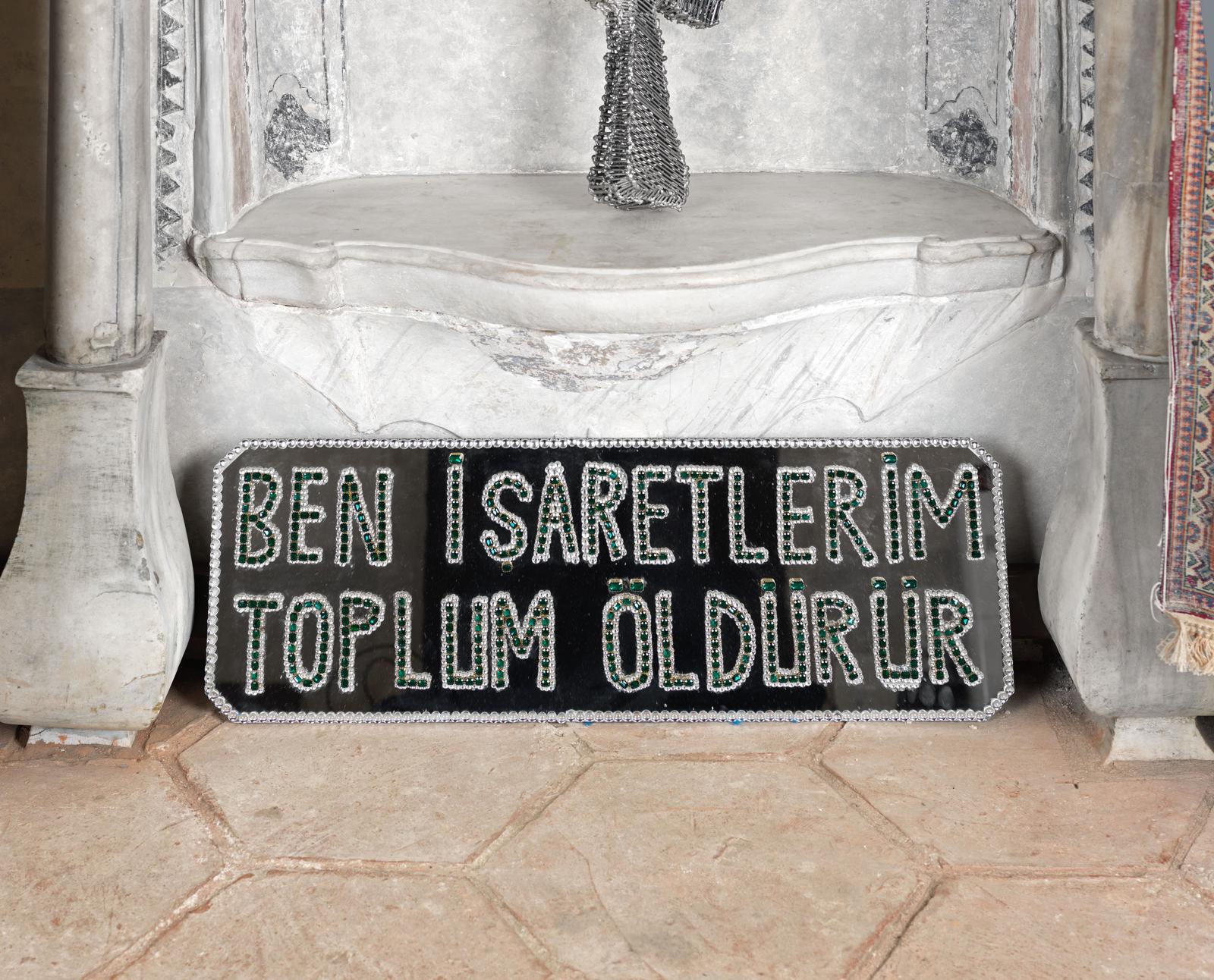
Bizbize: What moments stayed with you most from your talk at LSE with Dr. Zeynep Kılıçoğlu?
The Q&A was actually my favorite part.
Bizbize: Lastly, is there a “daily magic” or superstition you’d like people to notice more in their everyday lives?
I love noticing how these ancient gestures continue to live inside our most ordinary movements.